Bewildered Owl on a Flower Branch Embroidery Review
Some designs grab attention because they are loud. Others, like Bewildered Owl on a Flower Branch, pull you in quietly with an expression, a tilt of the head, and a composition that feels both cozy and clever. As someone who stitches for clients and tests new files almost weekly, I look for designs that will actually read well after the needle stops. This one has a personality that could easily become a signature piece in small-batch handmade collections, and I want to walk through exactly how it holds up when you move from screen preview to finished embroidery project.
What Hits You First About the Bird’s Expression
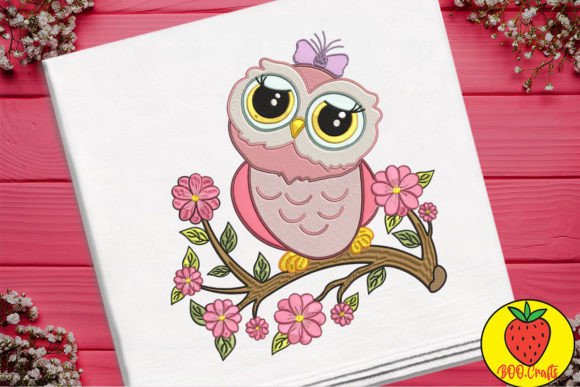
Right away, the owl’s face anchors everything. The “bewildered” look isn’t cartoonish; it’s that slight, quizzical head angle and the wide-set eyes that give it a gentle curiosity. The floral branch frames the bird without crowding it, leaving enough breathing room for the outline to stay clean even on moderately textured fabrics. For a machine embroidery design in the Birds category, this one avoids the trap of becoming a solid block of thread. The feather layers and petal curves suggest careful digitizing that respects negative space, which is exactly what you want when stitching on items people will touch, wash, and wear.
Real-Talk Scenario: The Custom Tote Bag That Sold Out
Picture a Sunday afternoon in the studio. I’m testing Bewildered Owl on a Flower Branch on a natural canvas tote, the kind local bookshops and boutiques love to carry. The tote is unbleached cotton, medium weight, with a subtle slub texture. Before hooping, I fuse a medium-weight cutaway stabilizer to prevent shifting—canvas can be grainy, and that grain will distort fine running stitches if you skip backing. I choose a muted olive for the branch, warm ochre and cream for the owl, and a dusty rose for the flowers. No neon. No glitter. Just calm, nature-inspired thread colors that let the face do the talking.
After the final trim, the owl stares up with an expression that makes people smile. It’s not trying too hard. That tote sold to the first customer who walked into the co-op shop, and within a week I had four custom orders for similar totes in different sizes. This is how a good handmade product catches momentum—start with a design that stops the scroll or the stroller, then let word spread.
Why the Layout Feels Ready for Merchandise
Many embroidery files put all the detail into the center and forget the edges. Here, the flower branch extends diagonally, creating movement. The owl sits slightly off-center, which feels more like an illustration than a stamped-on patch. That off-balance placement makes the design look intentionally composed when it lands on the left chest of a sweatshirt or the bib of an apron. It also helps when you’re staging a flatlay for an Etsy listing because the composition naturally draws the eye across the finished product.
Fabric Choices That Let the Stitches Sing
Not every design stretches gracefully across all textiles. This one thrives on stable, non-stretchy surfaces. Think woven cotton, linen blends, light canvas, denim, and twill. The satin stitches on the owl’s eye area are dense enough to hold crisp edges but not so heavy that they pucker on a well-stabilized quilting cotton. On loopback French terry for a sweatshirt, I’d use a water-soluble topper to keep the stitches from sinking into the pile. The fill stitch areas—the body feathers and branch bark—have a lovely rhythm, with stitch direction changes that catch light differently depending on where you stand. That’s the kind of detail that lifts a simple custom apparel piece into boutique territory.
For baby embroidery projects, like a small blanket corner or a muslin swaddle accent, the design scales down well if your hoop size permits. The owl’s features remain recognizable even at four inches wide, though you’ll want to test the smallest details, such as the leaf veins and tiny claws, before committing to a production run on delicate fabric texture. A too-small rendition might lose those fine lines, and the “bewildered” charm comes largely from the clarity of the eyes and brow.
The Cap and Apron Test: Curved Surfaces and Daily Wear
Caps are notorious for chewing up designs that weren’t digitized with a curved path in mind. When I floated this design on a structured dad hat, the branch followed the cap’s curve far better than expected because the main elements sit along a gentle diagonal rather than a rigid horizontal line. A 4x4 hoop placement worked, but I’d verify the exact hoop size requirement before assuming anything. If the design file includes multiple sizes, pick the one that keeps at least a quarter-inch margin from the cap’s side seams to avoid distortion during hooping.
Aprons present a different challenge: they hang straight, but they often get washed hot and dried hard. An embroidered apron with this owl design becomes a conversation starter in a small bakery or coffee shop. Before selling such items, I’d run a washing test with the chosen thread brand. Polyester embroidery thread generally holds color better than rayon through aggressive washes, and the dense satin-stitch outlining on the owl’s body might show some fuzzing after fifty cycles. Pre-washing the apron fabric and using a soft backing that moves with the weave will add years to the design’s visual appeal.
Sizing, Stitch Density, and That One Tiny Beak Detail
The beak and the eye highlights are where digitizing either shines or stumbles. Here, the beak is small but defined, using just enough running stitch and a smooth satin overlay to keep it from disappearing into the face fill. If you stitch this on dark fabric, a lighter thread for the beak outline prevents it from blending into navy or charcoal backgrounds. Always, and I mean always, do a quick black-and-white mockup on your screen or print it out. If the beak vanishes in grayscale, the thread contrast isn’t enough. That’s a simple fix, but it saves a world of frustration when you’re twenty minutes into a stitch-out.
Stitch density across the flower petals feels balanced—tight enough to give a satin sheen, open enough to avoid bulletproof stiffness. The branch uses a textured fill that mimics bark, and that’s a nice touch for handmade product quality. It also means you won’t have to explain to a buyer why the design feels like armor on a lightweight pillow cover. When I touched the stitched area after removing the hoop, it had a pleasant, flexible hand, which matters a lot for items people snuggle or lean against.
Where You Might Want Extra Caution
No design is universal, and this one asks for a bit of sense before you drop it on every product in your shop. Here’s where I’d pause:
- Small hoop sizes: If the design requires a 5x7 or larger hoop and you only have a 4x4, check the listing carefully before purchasing. Shrinking the file beyond a certain point may clobber the eye clarity.
- Stretchy fabric: On ribbed knit cuffs or very thin jersey, the design’s medium density could cause tunneling. Use a strong fusible interfacing and a ballpoint needle, and consider reducing machine speed.
- Textured fabrics: Thick terry towels will swallow the petal edges unless you heavily pre-flatten the nap with a water-soluble topper. The branch texture might read as “messy” rather than “bark” under those conditions.
- Layering on dark garments: The owl’s lighter belly stitches might show the dark fabric through if the density isn’t bumped up slightly. Test on a scrap of the exact garment color, not just a similar store-bought fat quarter.
- Frequent washing: Items like dish towels should have a secure backing that doesn’t shrink with heat. The small detached elements, like tiny leaves, might need extra tie-in stitches to withstand a dryer cycle.
Commercial Life and Etsy Seller Confidence
For Etsy sellers and craft business owners, the emotional tone of an embroidery file directly affects customer trust. A design that feels playful but not juvenile—like this owl—lands well across age groups. The “bewildered” mood makes it suitable for baby shower gifts, teacher thank-you totes, woodland nursery pillow covers, or even a whimsical holiday embroidery accent if you swap in wintery thread hues. Because the design isn’t overtly seasonal, it moves all year. That’s a smarter inventory choice than a pumpkin or a snowflake, especially for small shops trying to stretch each dollar.
Before you list a finished item, confirm that the digital embroidery file comes with appropriate commercial embroidery usage rights. Some files allow finished products on handmade goods for resale, others limit to personal use only. This information should be clearly stated in the design asset’s description. If it isn’t, ask. A quick message to the digitizer now can prevent a copyright headache later, especially if your shop scales into wholesale.
How It Behaves in Mockups and Product Previews
When I mock up a printable mockup or a lifestyle photo, the owl’s face becomes the hero. The tilt of the head and the branch’s curve give photographers and shop owners a natural focal point. Even on flat-lay shots, you won’t need to fuss with props to make the product look interesting. The design carries its own story. That’s a huge advantage when you’re building brand consistency across social media and your shop homepage. I’d blow up a detail shot of the eye and beak for a listing’s second image—those tiny, precise stitches speak directly to buyer engagement and signal quality before price.
Final Designer Notes Before You Load the Hoop
Every experienced stitcher knows that screen previews lie a little. So treat Bewildered Owl on a Flower Branch with the same thoughtful prep you’d give any investment design:
- Test stitch on a scrap of the actual fabric and color you’ll use for the final piece.
- Audit thread color contrast under natural and indoor light. Swap out a shade if the branch blends into the background or the eyes lose their pop.
- Check the stitch density preview in your software. If areas look overly dense, you might need to adjust tensions or run a slower stitch-out.
- Confirm the required hoop size and the available file formats before purchasing. Not all shops offer universal formats, and you don’t want to end up with a file your machine can’t read.
- Print a grayscale version of the design. Tape it to the product you plan to stitch. Does the shape still read from three feet away? If yes, your layout will communicate instantly on a tote bag design, a sweatshirt embroidery front, or a custom patch.
This Birds-inspired embroidery file has a quiet staying power that will appeal to anyone who values handmade presentation and expressive, nature-based visuals. It’s the kind of design that starts as a single test stitch and quietly ends up on half the products in your next craft fair display. Just give it the prep it deserves, and let that bewitched little owl do the heavy lifting of making customers fall in love.