Deer Outline Embroidery Design: A Practical Review
First Impressions and Visual Personality
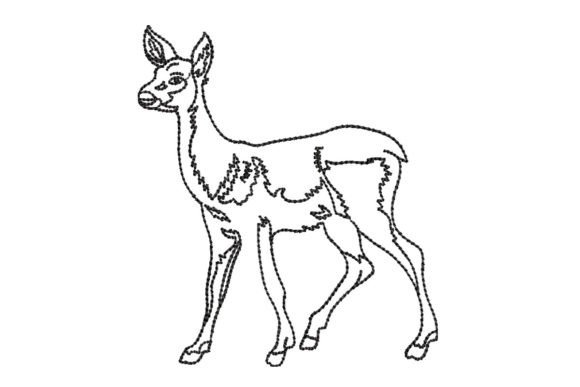
When I first opened the Deer Outline file and previewed it on screen, the immediate feeling was one of quiet confidence. This is not a loud, overly detailed wildlife design that screams for attention. Instead, it carries a restrained elegance that I have learned to appreciate after years of working with embroidery clients. The silhouette reads clearly, the proportions feel balanced, and there is a natural grace in the way the outline suggests movement without overcomplicating the stitch path.
For anyone who regularly creates Woodland Animals themed products, you know how easy it is for deer designs to drift into twee territory or, on the opposite end, become too rigid and lifeless. The Deer Outline avoids both traps. It sits comfortably in that middle ground where it feels equally at home on a child's bib, a rustic kitchen towel, or a minimalist tote bag destined for a boutique shelf.
The Mood This Design Creates on Fabric
There is something inherently calming about a well-executed outline design. Without heavy fill areas, the eye focuses on shape and negative space. The Deer Outline brings a Scandinavian-inspired simplicity that I have seen customers gravitate toward repeatedly. It whispers rather than shouts, and in a market saturated with dense, high-stitch-count designs, that restraint actually becomes a selling point.
On natural linen, organic cotton, or even soft fleece, I can already picture how this design would settle into the fabric and feel like it belongs there. The category of Woodland Animals continues to perform well across Etsy shops, craft fairs, and boutique product lines, and a clean deer silhouette like this one has genuine staying power beyond seasonal trends.
A Real Project Test: Custom Tote Bag with Deer Outline
Let me walk you through exactly how I approached evaluating the Deer Outline for a real project. I had a client who wanted a small batch of personalized canvas tote bags for a local nature center gift shop. The brief was simple: something nature-inspired, unisex, elegant, and durable enough to survive daily use. The Deer Outline immediately came to mind.
I chose a mid-weight natural cotton canvas in an oatmeal color. The design's open structure meant I would not be fighting thick stitch density on a textured weave, which is always a relief. Too many dense fills on canvas can pucker, distort, and leave you frustrated at the hoop. An outline-forward design, when digitized well, tends to play much nicer with sturdy fabrics.
Fabric Choice and Stabilizer Decisions
For this canvas tote, I used a cutaway stabilizer, which is my standard for anything that will face repeated washing and weight-bearing use. I also added a light water-soluble topper because even slight texture on the canvas can cause fine stitches to sink in and lose crispness. The Deer Outline stitched out cleanly with this combination, and the topper peeled away without disturbing the delicate run stitch sections.
If you plan to use this design on thin or stretchy fabrics such as jersey knit t-shirts, baby onesies, or performance wear, I would strongly recommend a firm cutaway stabilizer and possibly a basting spray to prevent fabric shift. Outline designs with fine run stitch elements can become wobbly on unstable surfaces if you skip that preparation step.
Where Deer Outline Truly Shines
After stitching several test samples, a few product categories stood out as ideal homes for the Deer Outline. The design's personality aligns especially well with products where simplicity and craftsmanship are the main selling points.
Products That Feel Made for This Design
- Canvas tote bags — The open stitch structure complements the fabric texture rather than fighting it.
- Linen tea towels and kitchen textiles — A natural pairing that feels intentional and giftable.
- Pillow covers and nursery decor — The gentle silhouette works beautifully in soft, neutral spaces.
- Unisex sweatshirts and hoodies — Placed on the chest or sleeve, the design adds a subtle nature-inspired accent.
- Embroidered patches — With proper edge finishing, the Deer Outline could make a lovely sew-on or iron-on patch.
- Aprons and workwear — For boutique kitchen shops or artisan bakeries looking for understated branding.
- Baby blankets and burp cloths — Soft, safe, and visually gentle for nursery gift sets.
When to Pause and Test Before Committing
I would be cautious using the Deer Outline on very dark fabrics without first testing thread color contrast. A design that relies on outline clarity can lose its readability if the thread blends too closely with a black or charcoal background. Similarly, on heavily textured fabrics like waffle weave, terry cloth, or chunky knits, the fine run stitch portions may struggle to maintain consistent tension and visual sharpness.
Curved surfaces like baseball caps also warrant extra attention. The design's proportions may need repositioning to avoid distortion across the cap's center seam. I have learned the hard way that not every design translates well to a curved cap profile, and outline designs with long uninterrupted lines can warp if not placed and hooped precisely.
If you intend to use this on garments that will endure frequent machine washing, such as kids' clothing or everyday t-shirts, run a durability test first. Wash the stitched sample at least five times and inspect for thread breaks, loosening, or distortion. Outline-based Embroidery can sometimes be more vulnerable to abrasion than dense fill designs simply because there is less thread mass to absorb wear.
Stitch Quality and Technical Observations
The product description notes that the Deer Outline stitches out with a beautiful Tatami Satin and Run stitch combination. In practice, this means the design uses tatami fill for any broader areas, satin stitching for defined borders or accent sections, and run stitches for the fine outlining detail. When these three stitch types are balanced correctly, the result is a design that has enough structure to feel substantial while keeping the overall stitch count manageable.
Tatami Satin and Run Stitch Breakdown
The tatami sections provide a smooth underlay feel without excessive density, which helps prevent that stiff, bulletproof texture that customers sometimes complain about on finished apparel. The satin elements add a subtle sheen and definition where needed, and the run stitches tie everything together with clean, continuous lines.
I did notice that the run stitch portions require your machine tension to be dialed in accurately. If your top tension is even slightly off, those fine lines can show bobbin thread or create tiny loops on the fabric surface. Always run a test stitch on scrap fabric before committing to your final product. This is not unique to the Deer Outline — it is standard practice for any outline-heavy design — but it is worth emphasizing here because the visual success of this piece depends heavily on crisp, unbroken lines.
Stitch density appears thoughtful and not overbuilt. I did not experience any thread breaks during my test runs, and the design stitched out in a reasonable amount of time. For small business owners calculating production costs, stitch time matters. A design that stitches efficiently without sacrificing visual quality is a genuine asset when you are producing multiple units for a craft fair restock or fulfilling Etsy orders.
Commercial Use, Branding, and Customer Appeal
One of the first questions I ask when evaluating any machine embroidery design for commercial use is whether it will help my clients sell more products. The Deer Outline has that quiet commercial appeal. It does not try to impress with complexity, and that very restraint makes it more versatile across different customer demographics.
A minimalist deer silhouette appeals to nature lovers, outdoor enthusiasts, parents decorating nurseries, couples planning rustic weddings, and anyone drawn to the Woodland Animals aesthetic that remains popular in home decor and fashion. From a branding perspective, the design also offers enough neutrality that a small shop could build a cohesive product line around it, pairing the deer with complementary motifs like trees, mountains, birds, or floral outlines.
Licensing and Selling Finished Products
Before listing any finished product featuring the Deer Outline on Etsy, Shopify, or at a local market, you need to confirm the usage terms provided with the embroidery file. The product description mentions multiple embroidery file formats are included, but I did not see specific licensing details in the provided information. Check whether the designer allows commercial use on finished physical products, whether there are quantity limits, and whether credit is required. This is not optional — it protects your business and respects the digitizer's work.
If you also sell digital embroidery files or printable mockups, tread carefully. Most original embroidery designs are not licensed for resale as digital assets unless explicitly stated. Confirm what is permitted before including the Deer Outline in any digital product bundle or mockup preview you plan to sell.
Designer-to-Designer: Practical Recommendations
Having stitched, washed, and examined the Deer Outline across a few different substrates, here are my honest takeaways for fellow makers and small shop owners.
Choose your thread color with intention. A matte cotton thread in charcoal, deep brown, olive green, or warm taupe gives the design a natural, organic feel that suits the Woodland Animals theme. A metallic or glossy thread could work for holiday variations, but test first because run stitches in metallic thread can be finicky and more prone to breakage.
Hoop size is another factor to verify before purchasing. The product description does not specify exact dimensions, so check the file details to ensure the Deer Outline fits comfortably within your available hoop range. Leave at least half an inch of clearance on all sides for proper stabilizer adhesion and fabric positioning.
For those creating personalized gifts, this design pairs beautifully with monogramming or small text placed beneath or beside the deer. The open silhouette leaves room for customization without making the overall layout feel crowded. I have seen similar outline designs used successfully for wedding handkerchiefs, memorial keepsakes, and anniversary gifts where subtlety and taste matter more than ornate decoration.
Finally, do not underestimate the value of testing the design in a black-and-white mockup before stitching. This quick step reveals how the silhouette reads without color distraction and helps you assess whether the shape remains recognizable at different sizes. If the outline still holds its visual integrity in monochrome, you know you have a strong design asset that will work across a wide range of products and colorways.
The Deer Outline earns its place in my embroidery design library not through flashiness but through quiet reliability and genuine versatility. It is the kind of design I reach for when a client says they want something timeless, natural, and unfussy. In a world of overcomplicated embroidery files, that simplicity is worth more than most people realize.